Family Genealogy and Ancestry Research

How does genealogy research work?
-
Analyzing the potential and determining the cost of genealogical research

-
Genealogical search and processing of genealogy research materials

-
Genealogical research results, final product

-
Presentation of research results

Family tree research and genealogical search takes place in several logical stages:
-
01
Analyzing the potential and determining the cost of genealogical research
Candidate of Historical Sciences, Associate Professor of the Department of History, Museology and Cultural Heritage of the National University "Lviv Polytechnic". The field of scientific interests is the genealogy of the nobility of the Rus' Voivodeship in the 15th-17th centuries, the early modern history of Ukraine. He compiled his first "commercial" pedigree back in 2013, since then he has been combining scientific and teaching activities with the entrepreneurial activities of a commercial genealogist and historian. He has more than a hundred successfully studied family histories, compiled genealogical trees, and solved family secrets.
-
02
Genealogical search and processing of genealogy research materials
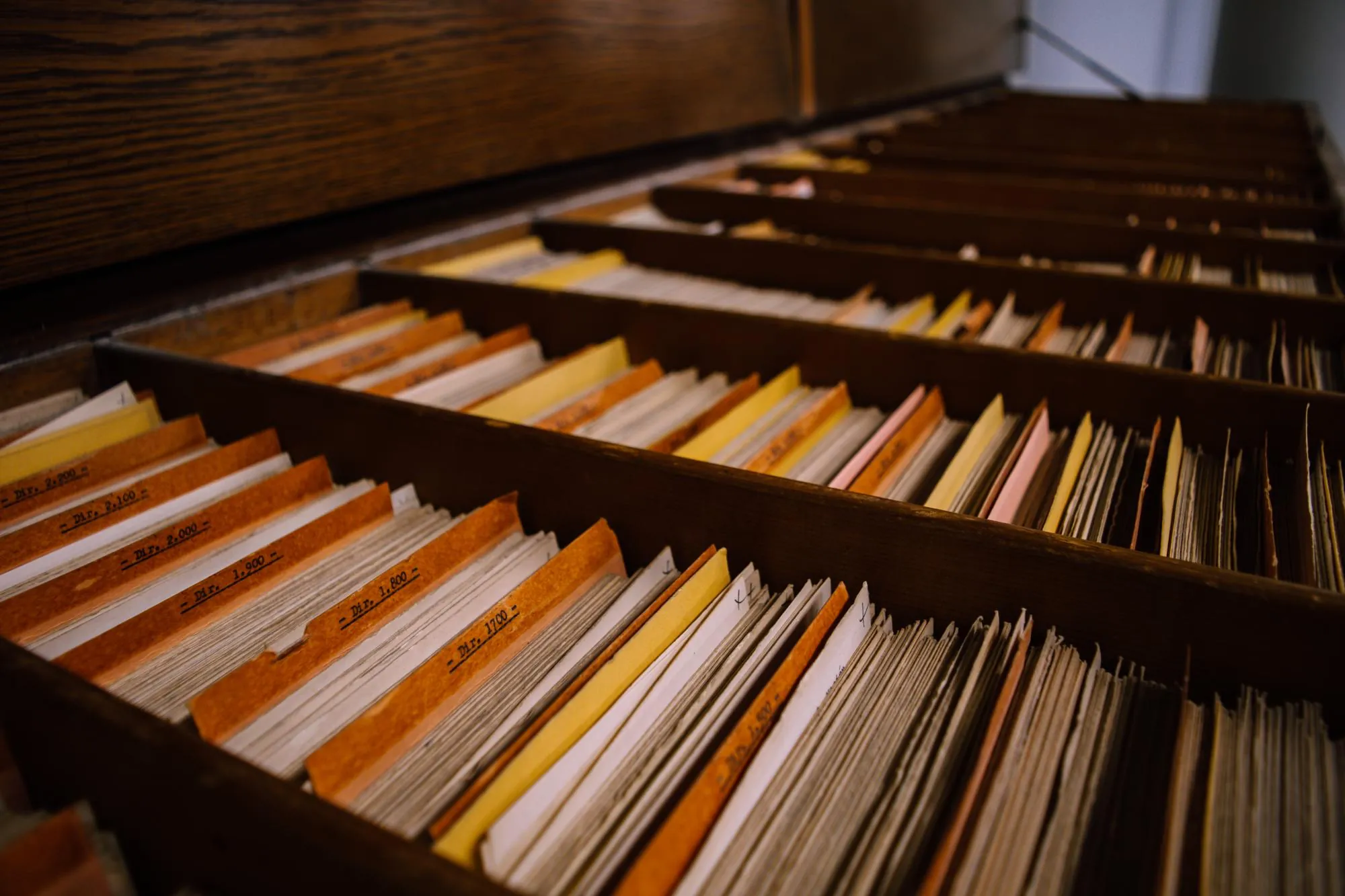
The search for documents on the history of the family is carried out mainly in archives, where we try to find out as much information as possible about your ancestors. More and more documents are appearing online, however, their proofreading and processing still require special skills, a lot of time and relevant experience. In Ukrainian realities, we are still far from creating global genealogical databases, where in two clicks you could find out your lineage. The basis of genealogical research is metric books, confessional lists, revision tales, extracts from land ownership, registry books, court cases, noble cases, etc. Search work can also be carried out in civil registry offices, through interviews with relatives and processing of family archives, through expeditions to the places of residence of the family, or to the cemetery. This stage of research is the longest. After all, searching for information about one family line (paternal or maternal) takes on average from two months to six months, depending on the number of documents, their location and state of preservation.
Finding and collecting documents for the history of the family is only half the battle. Their high-quality proofreading and analysis are necessary. A good researcher is one who knows how to ask the right questions to the document and extract the maximum information from it. Based on the collected documents, we establish family ties, reconstruct the biographies of family members, determine the years of their life, the composition of families, and their occupations. We must delve into the history of the region where the family lived.
-
03Genealogical chart of a family from the Kyiv region
Genealogical research results, final product
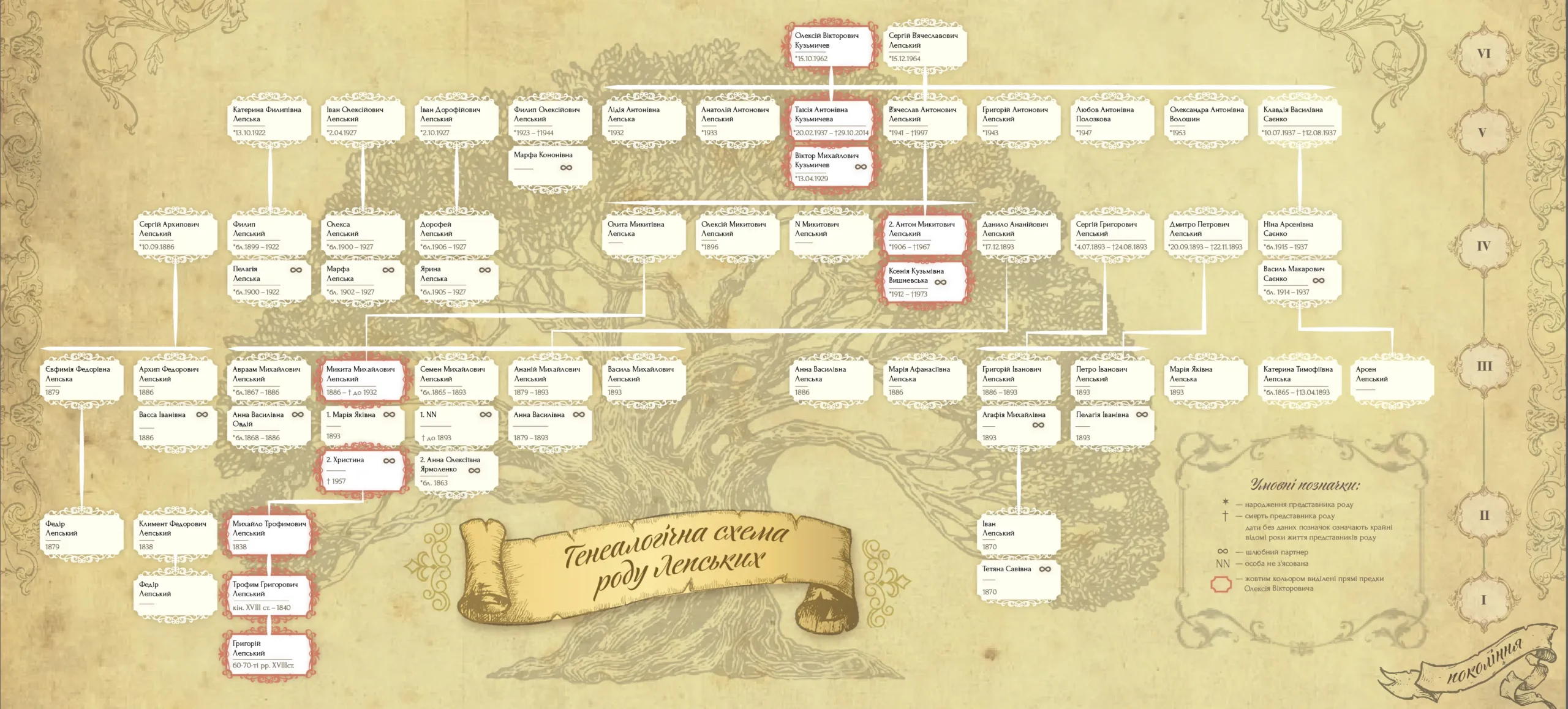
It is traditionally accepted that a family's genealogy is drawn up in the form of a family tree, or a pedigree chart, because this is the most convenient and visual way to present the change of generations and the composition of the family.
As a rule, a family tree is built by finding out the ancestors on the male line. It is from the father that the family name is usually passed down. Genetics has also proven that the male chromosome is passed down only from father to son. Separately, we also study the family tree on the mother's line with a similar structure of the family tree. You can also study the family tree on all family lines, but it should be noted that in each subsequent generation the number of ancestors doubles. In the seventh generation there will already be 64 of them.
The genealogical table contains data on the years of life of your ancestors, information on dates of birth, death, and marriage.
The following link contains a genealogical chart of a peasant family from the Kyiv region, covering the period from the 18th century to the first quarter of the 20th century. Within this chronological framework, it was possible to trace the history of nine generations of the family. The chart presents all members of the family along one line (paternal), including distant families. The founder of the family is at the bottom of the genealogical tree, and it is visible how the family grew with each subsequent generation and by the beginning of the 20th century it already comprised a dozen larger and smaller families:
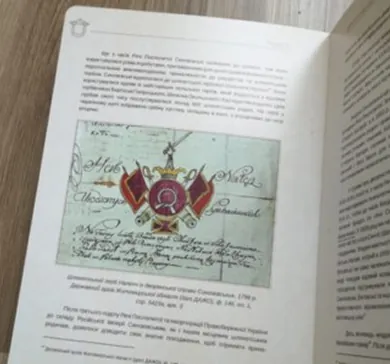
Fragment of a report on family history researchAn analytical report on the history of the family is also necessarily attached to the genealogical chart. The report is presented in the form of a story, where the history of the family and its personal composition are revealed generation by generation. In the report, we tell about the origin of the family and its surnames, describe the biographies of individual representatives of the family, and present all the collected facts about the life of certain representatives of the family (education, occupation, land ownership, family and in-law ties, place of residence, etc.). Photocopies of the found documents are provided in the text. Usually, the history of the family along one line from the 18th century to the Second World War can be presented on 20-40 pages. All the facts given in the report must be properly formatted with references to the relevant archives, funds, descriptions, cases, and specific page numbers. This material can become the basis for the publication of a book-album with the history of the family.
Below is an example of a fragment of such an analytical report:
As a rule, the pedigree of an average Ukrainian family can be reconstructed up to the second half of the 18th century – that is, approximately 6 to 10 generations. How deeply a family history can be reconstructed depends on a number of factors:
– the region of origin of ancestors – we are talking about the availability of sources. If your roots come from the territories of modern Lviv region, then here we are dealing with metric books that have been relatively well preserved since the time these territories became part of the Austro-Hungarian Empire; similar documentation was kept in the Ukrainian lands that were under the rule of the Russian Empire, but its state of preservation is worse and depends on each specific settlement – somewhere the documents have been preserved, and somewhere not.
– The class origin of your ancestors – if your ancestors came from the nobility, then it is possible to reconstruct the family genealogy within a few centuries. However, if your ancestors came from simple peasantry, which is observed in most cases, then at best the first written information about your family will date back to the end of the 18th century.
The package of materials that the customer receives also includes databases that we have accumulated during the research. The GED.COM format allows you to import the collected information into popular online genealogy resources, such as MyHeritage or Ancestry. If you have already taken a DNA test, we will provide a historical commentary on its results.
-
04
Presentation of research results
Often, genealogy and family trees are ordered as a gift, or the customer wants to receive the material in the form of a book or an artistically designed family tree. In this case, the finished materials of genealogical research require proper graphic design. We practice the artistic design of the genealogical scheme with subsequent printing on canvas, as well as the adaptation of the historical part of the research (report) in the form of a book-album. The cost and term of design of the materials are determined separately from the cost of the research itself.
At the customer's request, the artist can visualize the genealogical table as follows:
Sample of pedigree artwork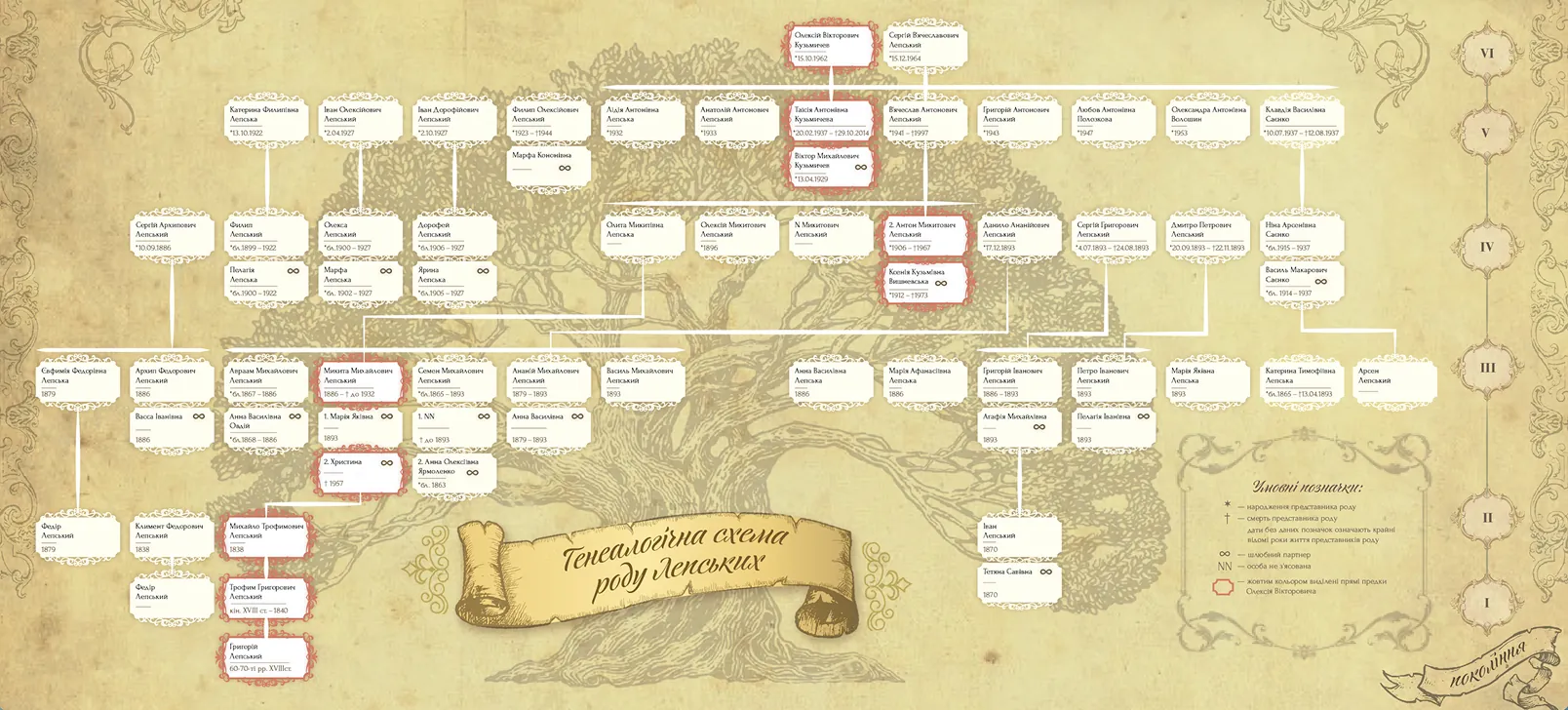 A page from a family history book
Such a genealogical chart can be printed on a canvas measuring 70x50 or 80x60 cm, which can be a beautiful and unique gift for an anniversary, birthday, or any other occasion.
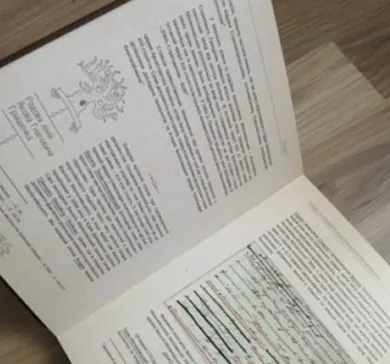
We can also make a family history book. Below is an example of a page from such a book:
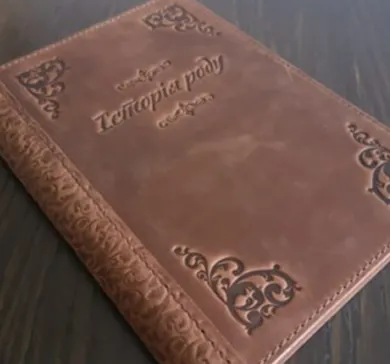
And also the appearance of the book itself:

Price: 1200 $ for one family branch (research on one surname) from the end of the 18th century to 1945.

Do you have any questions or are you ready to provide source data for the study for analysis? Call us or leave a request on the website:
Other company services
Researching the history of a settlement

Researching the history and origin of the surname

Historian consultation

Translations of ancient documents

Genealogical trips to ancestral places
Research on the history of institutions, organizations and enterprises
Lectures on history and genealogy