
The Central State Historical Archive in Lviv is undoubtedly one of the leading archival institutions in Ukraine, and in terms of the content of materials and fund collections, it is undoubtedly one of the richest collections in Central and Eastern Europe. The history of the archive is ancient, it can be conditionally traced back to the founding of Lviv in the 13th century, because since then princely charters and privileges have been kept in the city. Nevertheless, the foundation of the current archive was laid in the times when Galicia was part of the Austrian Empire. Even then, the archive was located in the premises of the former Bernardine monastery, hence the informal name of the institution «Bernardine archive», which can still be heard among researchers today. What can be interesting about the archive for genealogy researchers today and how the work of this institution is organized, we will try to understand in our brief review.
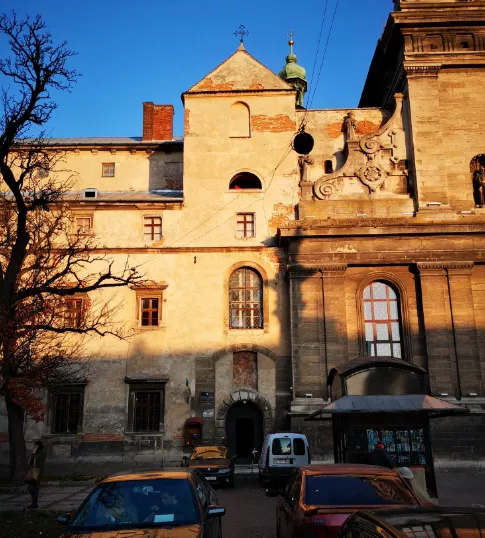
Entrance to the Central State Historical Archive in Lviv
Collection of metric books of the Central State Historical Archive in the city of Lviv
Let's start with the most important source for a genealogist - the collection of metric books of the Central Institute of Civil Registry, which is currently one of the largest in Ukraine. The archive contains primarily metrics from the territories of the present-day Lviv region. There are also metric materials from settlements in the Ternopil and Ivano-Frankivsk regions, but they mostly cover the period up to the 1870s. Later metric books should be sought in the regional archives of the Ivano-Frankivsk and Ternopil regions or in the local civil registry offices. It is important to note that until the end of World War II, the overwhelming majority of Ukrainians in Galicia were Greek Catholics by religion. Orthodox churches practically did not exist here. The collection of metric books of the Greek Catholic Metropolitan Consistory should be sought in the description of 4a of the 201st fund, while Catholic metrics are in fund No. 618. The problem with Catholic books is that the originals of these files are not published - genealogy researchers have to work with microfilms. To view them in the small reading room of the archive, only two old devices are available. They are already quite worn out, so viewing microfilms on them is not an easy and very tiring task. It should be added that it is better to come in the morning to view microfilmed materials, because there are many people who want to work at the devices, so a queue may form.
It is also worth paying attention to the peculiarities of working with metrics from sub-Austrian Ukraine. They were mainly kept in Latin, less often in Polish and Ukrainian. Austrian metrics are distinguished from Russian ones by greater informativeness - the house in which the family lived, the maiden name of the wife or mother were necessarily indicated. The tabular form, on the other hand, contributed to a compact form of recording. Therefore, for example, if a dozen metric books had to be ordered for a village in the Dnieper region for the last quarter of the 19th century, then for the same village in Western Ukraine there could be one metric book, with more information and details important for genealogical research. In general, more about Features of working with metric books and their correct reading can be found in a special series of articles prepared by us.
Josephine and Franciscan metrics
The Central Library of the Austro-Hungarian Empire has preserved a considerable documentary heritage from the times of the Austro-Hungarian Empire, which can significantly diversify the study of the genealogy of even an ordinary peasant family. In particular, the starting point for studying the genealogy of an average Galician family is often the Josephine metrics - lustrations of land and landowners, which were conducted by the Austrian authorities in their newly acquired territories in 1787. Here you can find information about ancestors who at that time owned land plots - fields, meadows, hayfields, pastures, gardens, ponds, etc. The documents indicate the names and surnames of landowners, the numbers of the houses in which they lived, and the type of their land ownership. The next similar census was conducted almost thirty years later in 1819 and was called the Franciscan metrics. If the Josephine metrics were included in the 19th fund, then the Franciscan metrics make up a separate 20th fund of the Central Library of the Russian Academy of Sciences.

Sheet from the Josephine metric in the Central Library
Maps and diaries of landowners
An excellent visual source for the history of the family are the maps stored in the 186th fund of the Central Data Archive. Most of them date back to 1848-1851. – It was then that the Austrian authorities carried out a centralized mapping of each settlement in Galicia. The peculiarity of these cadastral maps is that on them Austrian engineers carefully noted not only the features of the territory, relief, roads, situational plans of villages and cities, but also assigned each plot an ownership number, and many of them were even signed with the name of the owner.
In the second half of the 19th century, Galicia also practiced keeping land records and diaries of landowners, which listed who owned what land, how much tax they had to pay on it, and what income they received from land ownership. About this type of documents Read more in a separate article.

Fragment of a handwritten cadastral map from 1849 from the collection 186 of the Central Land Registry Office
Materials from Prosvita, Plast, Native School, cultural and economic organizations
Ukrainian cultural, educational, economic and sports organizations left behind many documents about their activities. For example, the materials of Prosvita are stored in the fund 348 and number hundreds of files that have been preserved for almost every cell in Galicia, almost in every individual village. There you can find information about the activities of branches, lists of Prosvita participants, visitors to reading rooms, which were ordinary Galician peasants. At the beginning of the 20th century, Ukrainians participated in the sports and patriotic organizations Plast, Sich, Sokil, Lug. Perhaps your ancestors were also their participants, and you can find information about this in the relevant funds.
City and Zemstvo court books
These are perhaps the most valuable materials of the Central State Historical Archive in Lviv. Despite their name, court books, they cover a wide range of economic, family, military, and socio-political life of Western Ukrainian lands in the 15th-18th centuries. If your family comes from the nobility of the former Ruthenian or Belgorod voivodeships, the Grodno and Zemstvo court books are one of the few opportunities to trace the genealogy of the family back to the beginning of the 15th century. For example, we have already written about the history and genealogy of the Tarnavsky family in the 15th-17th centuries, which was reconstructed on the basis of the Syanok Grodno and Zemstvo acts. Working with these materials is extremely interesting, but requires knowledge of Latin and skills in working with writing from the late Middle Ages and Early Modern times. More Read about the city and zemstvo court books in a separate article.
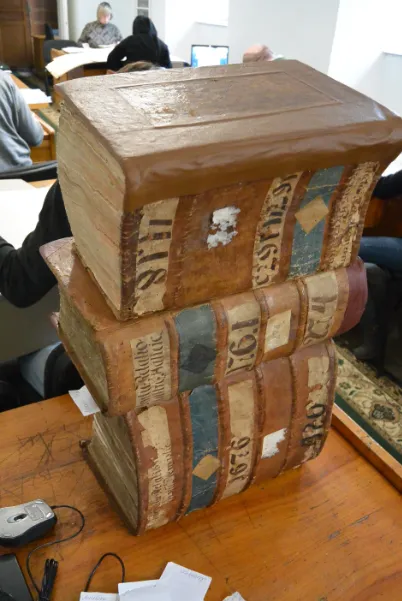
Act books of the Przemysl Grodno court of the 17th century.
CDIAL help desk
The Central State Historical Archive in Lviv has only recently released a catalog of metric books stored in the archive. A little earlier, a separate catalog of Roman Catholic metric books from the 618 fund appeared - these indexes can be downloaded from the archive page in the reference section. A genealogy researcher can also work in the archive catalog - there are special file boxes related to church metrics. It is worth noting that the CDIAL catalog is one of the best archive environments in Ukraine. There is also a powerful card index, organized according to the geographical principle, where you can find links to archival files for the vast majority of settlements in Galicia. There is also a thematic catalog that concerns state administration bodies of various historical periods, transport, agriculture, education, demography, etc. There are file indexes for individual individuals and personalities. Therefore, it is most advisable for a genealogist or village history researcher to start a visit to the Central Archives and Archives with work in the archive catalog.
Features of organizing the workflow in the archive
The workflow at the Central Archives and Archives of Ukraine generally resembles the procedural aspects typical of other Ukrainian archival institutions. The Central Archives and Archives of Ukraine reading room is open from Monday to Friday, from 9 am to 5:30 pm. The reading room used to be open to visitors until 7 pm and worked on Saturdays, but due to budget savings and staff reductions, the archive has been operating under a new work schedule for several years now. The last day of the month is a sanitary day, visitors are not accepted. Files at the Central Archives and Archives of Ukraine are usually issued on the third day after the order. Copying documents is paid, it costs 50 hryvnias per document.
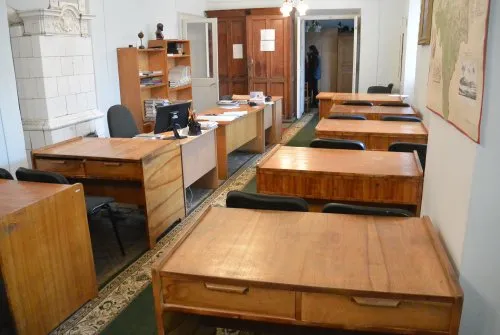
ЧCentral Institute of International Relations
These are the general features of the work of a genealogy researcher at the Central State Historical Archive in Lviv, and the collection of its main funds, important for genealogical research. If you are interested in more detailed information about certain archive funds - write in the comments, we will talk about them in our next materials. Remember that the historians of our agency will help you save time and money by conducting professional genealogical research at the Central Institute of Historical and Cultural Heritage.