
Have you become passionate about researching your family tree on your own? You have collected all the information about your family from your home archive and from the testimonies of older family members, but you don't know exactly how to continue your research? In this case, the next stage of your research will most likely take place in the archive.
In Soviet times, archives were closed institutions, where it was not so easy for the "uninitiated" to get. In our time, the situation is changing. Archives, although not as quickly and not as we would like, are becoming more accessible to ordinary Ukrainians. The old structure of the organization of archival institutions in Ukraine has remained from Soviet times. Today, the State Committee of Archives of Ukraine (a specially authorized central executive body in the field of archival affairs and records management) is subordinate to 680 institutions, including 9 central state archives of Ukraine. Among all these institutions, you will have to work with one of the central or regional archives. These may be materials from the Central State Historical Archive in Kyiv, or in Lviv, or one of the 24 state regional archives. It was there that birth records and other sources of genealogical research were gradually taken.
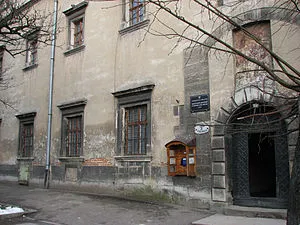
Entrance to the Central State Historical Archive in Lviv
The funds of regional archives are completed according to the geographical principle - that is, they gradually accumulate materials from the entire region to which this archive belongs. However, one should remember about the historical specificity of the administrative divisions of Ukrainian lands and be sure to take it into account in research. For example, the former Podolsk province of the Russian Empire once covered the territory of several current Ukrainian regions - Khmelnytskyi, Vinnytsia, part of Chernivtsi and Odessa. The center of the province was the city of Kamianets-Podilskyi. It was also the center of the Podolsk spiritual consistory, where a separate copy of the metric books and confessions was submitted from each parish. Later, the materials of the consistory were transferred to the regional archive of the Khmelnytskyi region, which is now located in the city of Khmelnytskyi. Thus, if you are researching the genealogy of a family from the Chechelnytskyi district of the Vinnytsia region, you should remember that Chechelnyk with the surrounding territories in the 19th century. was part of the Olgopil district of the Podolsk province and without searching in State Archives of Khmelnytskyi Region can't do without.
Before contacting the archive, you should check whether there are genealogical materials for the settlement where your relatives come from. The easiest way to do this is to use the consolidated catalogs of birth records for the relevant regions. Today, such annotated registers have been compiled for most regional archives of Ukraine and are available online.
These directories are not comprehensive, because since their publication, many metric and registry books from the civil registry offices have been added to the archives. In some regional archives, such as the Ternopil region, after the publication of the consolidated catalog of metrics, the numbering of cases changed and it is no longer relevant. Therefore, you should also pay attention to the reference devices available on the websites of the relevant archives. An updated description of the metric books of the Ternopil region can be downloaded from the website Ternopil archive.
If you managed to find the books you need in the relevant catalogs, then you will have to go to the archive itself. To do this, you should take your passport and a photo card with you. Carefully study the archive's working hours and separately the reading room's working hours. In many archives, Friday is a working day, but the reading room does not serve readers. As a rule, reading rooms are closed on the last day of the month for sanitary day, also remember about public holidays and shortened working days on the eve of the holidays themselves. Researchers sometimes have to go to a neighboring region and see a closed sign before the entrance to the archive, so be careful.
During your first visit to the archive, you will need to fill out a questionnaire and indicate the purpose of your research. If this is your family tree, there should be no problems with the issuance of files. If the relative is not yours, or distant, or the surname is different from yours, the administration may request a power of attorney to represent your interests in the archive, or additional documents confirming your family relationship with the family you are going to study. Such requirements are supposedly dictated by the law on personal data protection, which the archives interpret in their own way.
After filling out the questionnaire and receiving permission to work with documents, you still need to order the appropriate archival files. In archives, documents are grouped within collections, descriptions, and files. An archival file is the smallest storage unit. This can be a census book of a settlement for a certain period. A certain type of files are combined into a description, and descriptions into larger structural units of collections. Having written out the necessary files from the catalog of census books, or using the catalog or reference literature of the archive, you place an order on a special form. As a rule, you cannot order more than 10 files at a time, which in total have no more than 1000 sheets.
The next important point is that cases are almost never issued on the same day. In Ukraine, only the State Regional Archive of Ivano-Frankivsk Oblast can boast of this. In other archives, cases are issued somewhere 2-3 days after the order, and in an archive such as Zhytomyr – even after 2-3 weeks.
Once you have the case in hand, it is best to use photographic equipment, which will save a lot of time when working with the document. However, there are many nuances here too - in some archives, photography is paid, in others it is free, but you must obtain permission to photocopy from the archive administration for each individual document photographed.
Read how to work with metric books and other sources of historical research in a special series of articles we have prepared:
What is a metric book and how to work with it;
Features of working with confession books;
Features of birth records with marriage records;
Remember that independent genealogy research is quite possible, but it requires certain skills in working with ancient documents, the ability to find the necessary materials and, of course, time. You can always turn to professional historians, which will help you qualitatively research your family tree, compile a family tree, and collect copies of the most important documents for your family history.